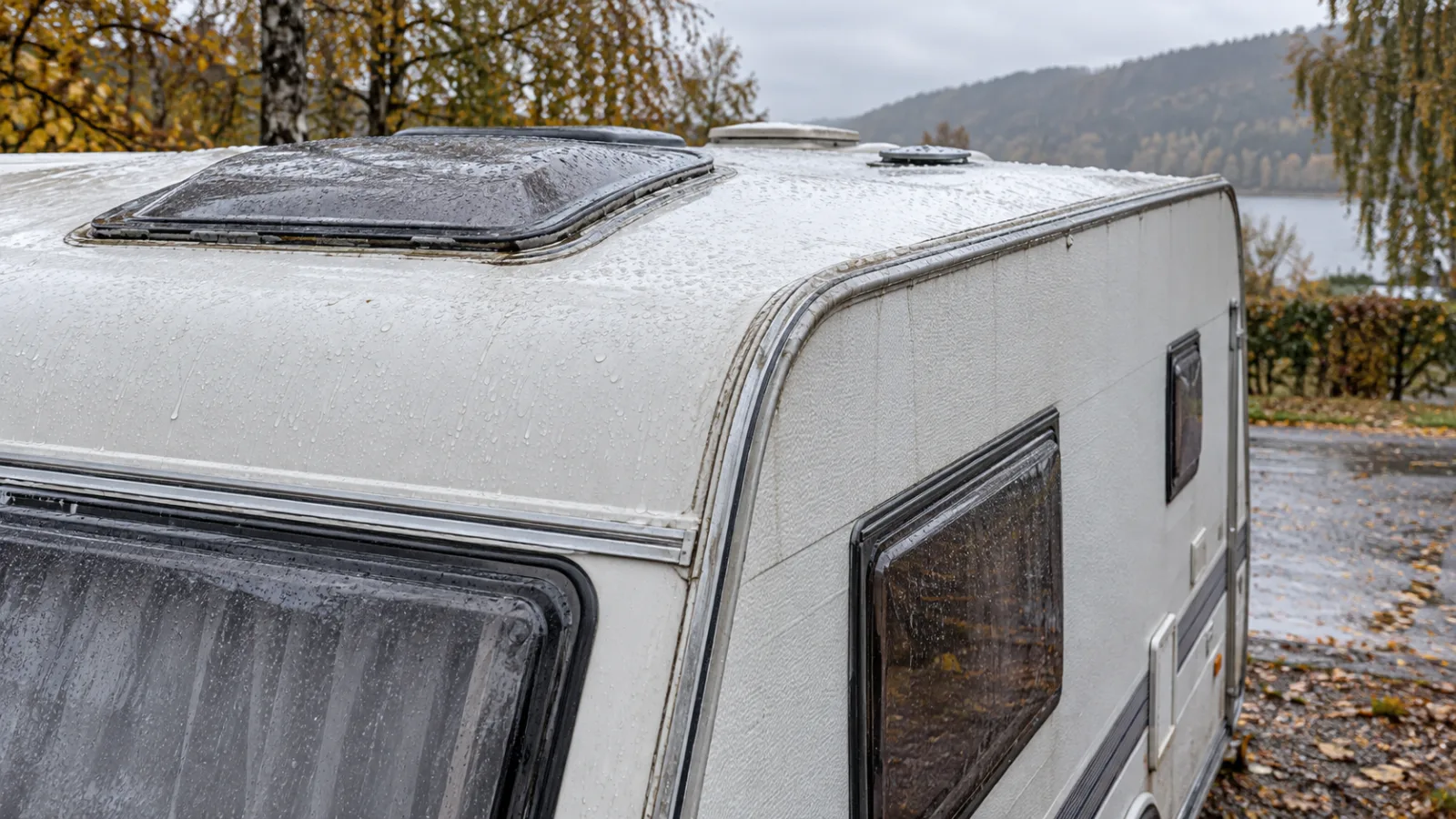
Rain has been falling for days. Water is running over the roof, around the windows and along the joints of the vehicle. From the outside, everything may still look fine. Inside, however, a small leak can go unnoticed for weeks. By the time a musty smell, stains or soft wall panels appear, moisture may already have reached the structure.
Autumn is therefore a good time to check a motorhome, caravan or campervan carefully. Persistent rain places more stress on older seals than a brief shower, while falling temperatures can also reveal condensation problems inside the vehicle.
Water often enters around openings
The roof itself is rarely the only area that matters. Rooflights, windows, doors, service hatches, ventilation openings, antennas and the joints between roof and side walls all interrupt the outer shell. Every one of these points depends on seals or sealants that have to withstand sunlight, frost, heat, vibration and movement.
TÜV NORD advises owners to inspect rooflights and overhead cupboards for leaks after heavy or prolonged rainfall. Manufacturer LMC also identifies joints, hatches, windows, seals, roof openings, edges and the underside as important points during a professional damp inspection.
Sealants age in older camping vehicles
Sealants do not remain unchanged for the lifetime of a camping vehicle. UV radiation, temperature changes, moisture, frost and vibration can make them brittle, cause them to shrink or separate them from adjoining surfaces. This is particularly relevant for older caravans and motorhomes, even if they have previously remained dry.
A sealant manufacturer’s maintenance guide recommends resealing a motorhome roof approximately every three to four years, and more frequently under severe temperature exposure. This is a general recommendation, not a universal replacement interval for every joint. The correct timing depends on the construction, materials, storage conditions and the vehicle manufacturer’s instructions. Rooflights, roof edges, antennas and other bonded or sealed openings should therefore be inspected regularly. Dry, cracked, porous or crumbling material requires attention.
Do not select a replacement compound by appearance alone. The product must be compatible with the roof material and the existing construction. If the joint is unclear, difficult to reach or already damp, a specialist workshop is the safer choice.
Wet windows do not automatically mean a leak
Moisture on the inside of a window can also be condensation. Warm, humid air meets a cold surface and water forms on the glass or surrounding material. Cooking, wet clothing, breathing and insufficient ventilation increase the amount of moisture inside a small vehicle.
The German Environment Agency’s guidance concerns buildings and indoor rooms, not camping vehicles specifically. The basic physical principle can nevertheless be applied: moisture should be removed through short, effective ventilation, while cold surfaces and concealed areas need attention. A hygrometer can help track relative humidity, but it cannot reveal water hidden inside a wall or roof.
Warning signs you should not ignore
- a musty or earthy smell after rain
- discolouration around windows, rooflights or cupboards
- soft, swollen or rippled wall and ceiling panels
- loose trim, peeling surfaces or dark marks in corners
- persistent moisture under mattresses, cushions or inside storage compartments
- visible cracks, gaps or brittle sealant on the exterior
A single sign does not prove where the water entered. Moisture can travel inside the construction and become visible some distance from the actual leak.
How to check your camping vehicle
Start outside when the vehicle is dry and there is enough daylight. Look closely at rooflights, windows, roof edges, corner profiles, hatches, cable entries and attachments. Do not climb onto the roof unless the manufacturer allows it and safe access is available.
Inside, inspect the matching areas as well as overhead cupboards, corners, the space below windows, storage lockers and the areas under mattresses. Use your eyes, nose and fingertips. A damp meter can provide useful indications, but readings depend on the device and the materials. A professional damp inspection remains the more reliable option, especially before a warranty deadline or when you suspect hidden damage.
A photograph only shows visible changes
The CampSecure™ app can send a daily status message with a photograph, location and battery level from a parked camping vehicle. This can help you notice visible changes or confirm that the vehicle is still where it should be. It cannot detect moisture inside walls, assess sealants or replace a manual inspection and professional damp check.
After several days of autumn rain, a careful look is worthwhile. Finding an ageing joint early is usually far easier than repairing a damp wall, roof or floor later.